
Stability Running Shoes With a Wide Toe Box, Compared
There are two ways to get a wide toe box in a stability running shoe. Buy a conventional stability trainer in a 2E or 4E, which adds room everywhere. Or buy one of the three stability shoes built on a more naturally shaped last: the Altra Paradigm at zero drop, the Topo Ultrafly at 5mm, and the Veloci Mesa at 10mm.
Here is every option side by side, what an independent lab measured at the toes, and what I tell people who ask for this at the fitting wall.
If you need 2E or 4E
The Brooks Adrenaline GTS, HOKA Arahi, Saucony Guide and New Balance 860 all come in 2E and 4E. A wider width adds room in the heel and midfoot as well as the toes.
If you need TOE BOX room
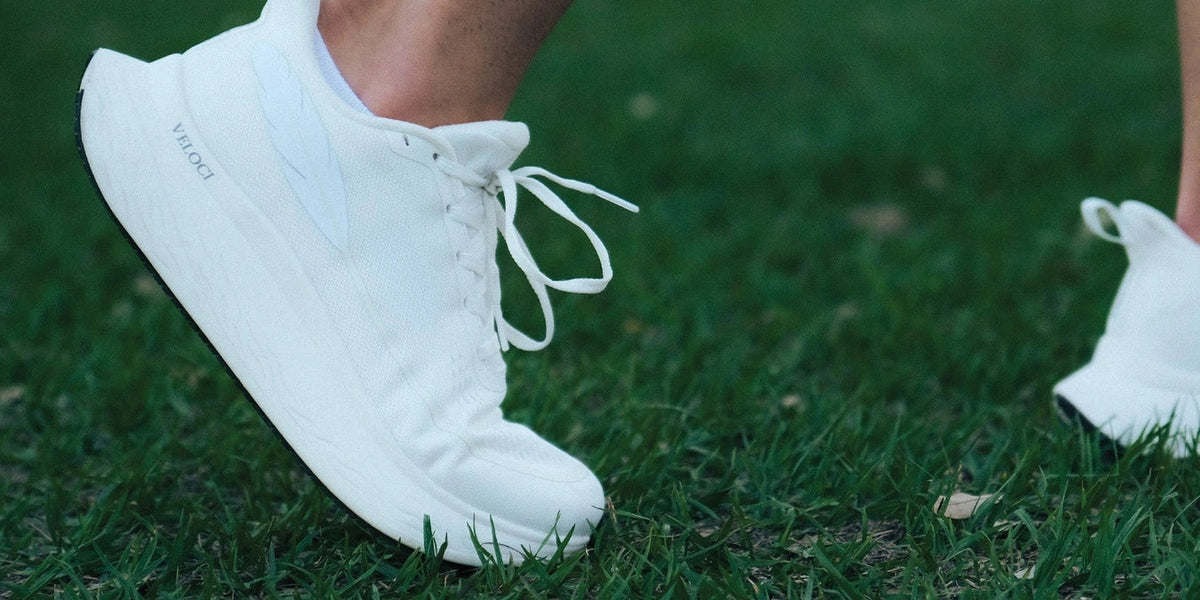
Three stability shoes are shaped like a foot: Altra Paradigm (0mm drop), Topo Ultrafly (5mm) and Veloci Mesa (10mm). The Mesa is the one that rides like the trainer so many already own with a natural fit.
Before the table, what we mean and what we do not. The Mesa is not a wide shoe and not a minimalist barefoot shoe. It is a D width with a naturally shaped toe box, so the room is in the shape of the front, not just bloating a shoe outward. It has an elevated heel drop with a full stack of cushion and moderate support. If you run in a Brooks Adrenaline or a HOKA Arahi today, nothing here needs relearning.
Which stability running shoes have room for your toes?
Seven, by our count, once you include the conventional shoes that offer a wider width. Three of the seven are built on a foot shaped last. The table lists all of them with the drop, how each one supports the foot, the widths the maker sells, and the toe box width RunRepeat measured by pouring a gel mold of the inside of each shoe.
| Shoe | Drop | Support | Toe box |
|---|---|---|---|
| Veloci Mesa | 10mm | Wingwall Stability System: denser ESS plate supports under the arch and around the heel | Naturally shaped/anatomical |
| Topo Ultrafly 6 | 5mm | Medial post, wraps the heel | Anatomical |
| Altra Paradigm 8 | 0mm | GuideRail sidewalls, wide platform | FootShape |
| Brooks Adrenaline GTS 25 | 10mm | GuideRails, both sides of the heel | Conventional |
| HOKA Arahi 9 | 8mm | H-Frame foam frame | Conventional, stretchier mesh on the 9 |
| Saucony Guide 19 | 6mm | CenterPath sidewalls, broad base | Conventional |
| New Balance 860v15 | 6mm | Stability Plane plate, firmer foam inside | Conventional |
Competitor specs are the makers' published figures as listed by Topo, RunRepeat (Paradigm 8), RunRepeat (Adrenaline GTS 25), Marathon Sports (Arahi 9), Doctors of Running (Guide 19) and Road Trail Run (860v15), checked October 2026.

Shape or width: which one do you actually need?
Most people asking for a roomier stability shoe need shape, not width. The tell is where the shoe feels wrong. If your heel and midfoot fit fine and it is only the toes that feel pressed together, an hour into a run or at the end of a shift, you want a shoe that is wider at the front and ordinary everywhere else. That is what a naturally shaped last does.
The lab numbers show the gap. In RunRepeat's measurements the two foot shaped shoes it has tested come in at 80mm and 82mm across the toe box, while the conventional four in a standard width come in between 70mm and 75mm. That is the difference between a front that tapers to a point and a front that follows the foot.
Feet are widest at the toes. Most shoes are narrowest there. One of our customers put it better than I ever have: "Feet are widest at the toes. Shoes are narrowest at the toes."
Why are there so few stability shoes shaped like a foot?
Because the two ideas grew up in different houses. Stability came out of the big brands, built with a firm wedge or a sidewall under the arch and the same tapered toe as every other trainer. The naturally shaped toe box came out of the barefoot movement, where the point was to strip the shoe down. For a long time you could have support or toe room, and nobody built both on one last.
Altra put a support system on its last, at zero drop, which asks a runner coming from a 10mm trainer to change how the foot lands. Topo's Ultrafly brought an anatomical toe box to 5mm with a medial post, a smaller step. We built the Mesa for the runners we see most often, the ones in an Adrenaline, an Arahi or a Guide, who were not going to relearn anything. They wanted the shoe they knew with a front that fit. So the Mesa keeps the 10mm drop, the rocker and the full stack of a daily trainer, and changes the shape of the front.
Stability shoe. Room for your toes. Those used to be opposites.

How does the Veloci Mesa support the foot?
Moderately, and from the inside edge. The Wingwall Stability System is a supportive ESS material set into the midsole foam along the inside of the shoe, running from under the arch back around the heel. A foot that rolls inward on landing compresses that part of a midsole first, and it is the part of a stability shoe that wears out first. Putting the denser material there is meant to give support that holds up later in the shoe's life, instead of fading as the foam packs down. A hidden microfiber underlay cradles the inside of the midfoot and a structured heel cup holds the ankle in place.
What it is not is a medial post. We did not want a hard wedge under the arch or a shoe that fights the foot. The goal was support that many runners can use, firm enough to notice on the inside edge, not so aggressive that a neutral runner would feel pushed around. Runners who have worn a traditional post tend to describe the Mesa as a touch more moderate, which is the design intent.
Everything else is the Ascent. Same last, same naturally shaped toe box, same 10mm drop, same rocker, same size. Ascent vs Mesa walks through how we choose between them.
What we see at the fitting wall
The runners who ask for a stability shoe with toe room usually arrive in an Adrenaline, an Arahi or a Guide, often in a 2E they bought because it was the only way to get space up front. When they put on a Mesa, the first thing out of their mouth is about their toes. Some version of "oh, my toes feel great," said with a little disbelief, because they did not know a shoe with support could feel open at the front. That comes before they have taken a step.
The second thing they notice, once they jog on it, is that the support feels like what they came from. The inside edge feels held where their old shoe held it, and the heel to toe roll is familiar. People who have worn a firm post for years sometimes call the Mesa a little more moderate. Nobody has had to learn a new way to land.
On sizing, the Mesa fits true to size compared with the other brands in the table. Order what you wear in your Adrenaline or your Guide.
And the honest limits. If you need a true 2E or 4E, a shoe that is wider from heel to toe, the Adrenaline, the Arahi and the 860 all make one and we do not. If your foot rolls hard enough that a fitter has put you in the most aggressive post on the wall, the Mesa's moderate support may not be enough, and you should trust the fitter. For everyone in between, which is most people who ask, the Mesa is the shoe. What we did not expect is how many of them run in it in the morning and then wear it to work, or out with the kids afterwards. It has become a lot of people's one pair.
Who should pick a different shoe?
The runner who needs a 2E or 4E, and Brooks, HOKA, Saucony and New Balance all build for that. Also, the runner who wants a minimalist zero drop on purpose, because the Altra Paradigm is a good shoe and the only stability option at 0mm.
If your heel and midfoot are comfortable in your current stability shoe but the front that feels crowded, you are the runner we built the Mesa for. Our piece on the signs your running shoes are too narrow up front describes what that feels like, and neutral vs stability covers whether you need support at all.

Veloci Mesa $180
10mm drop, 39mm / 29mm stack. Naturally shaped toe box on a standard D width, Wingwall Stability System, rocker geometry, structured heel cup. Fits true to size.
Free shipping. Free 30 day returns and exchanges. Every Mesa color.

Stability and toe room: common questions
Is the Veloci Mesa a wide shoe?
The Mesa is a D width with a naturally shaped toe box. The room is in the shape of the front, not the width of the whole shoe. If you need a 2E or 4E, the other options are better buys.
Is the Topo Ultrafly a stability shoe?
Yes. Topo lists the Ultrafly 6 as its stability trainer, with a medial post that wraps the heel, an anatomical toe box and a 5mm drop. It is the closest shoe to the Mesa in idea, at half the drop.
Is the Altra Paradigm a zero drop stability shoe?
Yes. The Paradigm 8 uses Altra's GuideRail sidewalls on its roomiest FootShape last at 0mm drop. Going from a 10mm trainer to zero drop is a change in how the foot lands, so most runners have to ease into it.
Can I get stability, a 10mm drop and a shaped toe box in one shoe?
Yes. The Mesa is the only shoe in the table that combines all three. The Adrenaline GTS matches the drop and the Topo and Altra match the shape; the Mesa does both on a standard width.
Does the Mesa fit the same as the Ascent?
Yes. The two are built on the same last, so your Ascent size is your Mesa size, and an exchange between them changes the midsole, not the fit. New to Veloci? Order your usual running shoe size.
Can I wear the Mesa for work or walking?
Yes. A lot of Mesa owners run in it and then wear it through the day, and plenty of our pairs go to nurses and people on their feet for long shifts. The rocker and the cushion do the same work walking as running. Walking shoes with room for your toes covers what to look for on a shift.
For the outside view of the Mesa, what independent reviewers say about Veloci collects the RunToTheFinish and Run Oregon reviews with the criticisms left in. The best way to settle shape against width is to put your hand in the front of both. Most run specialty stores carry the Adrenaline and the Arahi, and our store locator lists the ones that carry Veloci. If there is not one near you, our fit guide explains how the toe box should feel, and the Mesa ships free with free 30 day returns and exchanges.
For the long run.
Altra, FootShape and GuideRail are trademarks of their owner. Topo Athletic is a trademark of its owner. Brooks, Adrenaline GTS and GuideRails are trademarks of Brooks Sports, Inc. HOKA, Arahi and H-Frame are trademarks of Deckers Outdoor Corporation. Saucony, Guide and CenterPath are trademarks of their owner. New Balance and Fresh Foam are trademarks of New Balance Athletics, Inc. Veloci Running is not affiliated with, sponsored by or endorsed by any of them. Competitor specifications are taken from the makers' published information and the independent reviews linked above, as of October 2026, and may change with new versions.

Written by Tyler Strothman


Leave a comment
This site is protected by hCaptcha and the hCaptcha Privacy Policy and Terms of Service apply.